The Captain Tsubasa 2: World Fighters World Youth teams roster is the biggest in franchise history, and knowing who you are facing before kickoff changes how you build your approach. Bandai Namco confirmed 22 national squads on the official site, plus the Sao Paulo FC club team and one coming-soon slot that hints at a 24th roster. That means every tournament run throws a different tactical puzzle at you, from Brazil's Natureza-led attack to Saudi Arabia's Mark Owairan defensive wall.
If you are jumping into the World Youth arc for the first time, this breakdown gives you the full picture of every team, their star players, and how the bracket actually flows. We are covering the original manga squads, the brand-new additions supervised by creator Yoichi Takahashi, and the unlock structure so you know exactly what you are working with before the opening whistle.
The Complete World Youth Teams Roster Breakdown
The official Japan site confirms the full list of Captain Tsubasa 2: World Fighters tournament teams, and the spread is genuinely global. You get the traditional powerhouses from the manga, but the original additions like USA, Canada, and Indonesia make this the most diverse lineup the series has ever shipped. According to the official Steam page, the complete roster breaks down into three distinct tiers based on their role in the story and their in-game stats.
The World Youth arc core teams are the ones you will see in the main story mode, while the original additions exist to expand the tournament bracket and give you more variety in exhibition matches. The club team slot is unique because Sao Paulo FC represents the club football side of Tsubasa's career, which is a first for the series.
| Team Tier | Teams Included | Story Role |
|---|---|---|
| World Youth Core | Japan, Brazil, Germany, France, Netherlands, Argentina, Spain, Italy, England, Uruguay, Sweden | Main story opponents and bracket favorites |
| Original Additions | USA, Canada, Indonesia, Saudi Arabia, South Korea, China, Thailand, Uzbekistan, Cameroon, Senegal, Mexico | New faces supervised by Yoichi Takahashi |
| Club Special | Sao Paulo FC | Unlockable club team with unique playstyle |
The coming-soon slot on the official site has the community speculating about a 24th team, and the Season Pass schedule that runs through August 2027 suggests we might see additional national squads as DLC rather than just individual characters. That would be a first for the franchise, since previous entries locked the roster at launch.
Japan National Team Deep Dive and Key Players
Brazil Youth Pre-Order Unlock vs. Full Brazil National Team
The Brazil Youth team arrives exclusively as a pre-order bonus, granting early access to a young Brazilian squad before the main tournament roster unlocks. This is distinct from the full Brazil national team, which features Natureza, Carlos Santana, and goalkeeper Salinas as the tournament favorite. The youth variant serves as a practice tool for mastering Brazil's attacking playstyle, but lacks the star-power ceiling of the senior squad. Players who miss the pre-order window must wait for post-launch availability, making the youth team a time-sensitive strategic asset for early tournament runs.
Schneider's Fire Shot and Germany's Direct Approach
Germany's Karl-Heinz Schneider leads a fast, direct offensive system centered on his Fire Shot striker ability. Unlike Brazil's possession-based triangle, Germany prioritizes quick transitions and vertical attacks, with Schneider as the primary finisher. This contrasts sharply with France's flair-driven approach, where El Cid Pierre and Louis Napoleon rely on technical skill rather than raw power. Germany's direct style punishes defensive lapses quickly, making them a high-risk, high-reward pick against slower possession teams like the Netherlands.
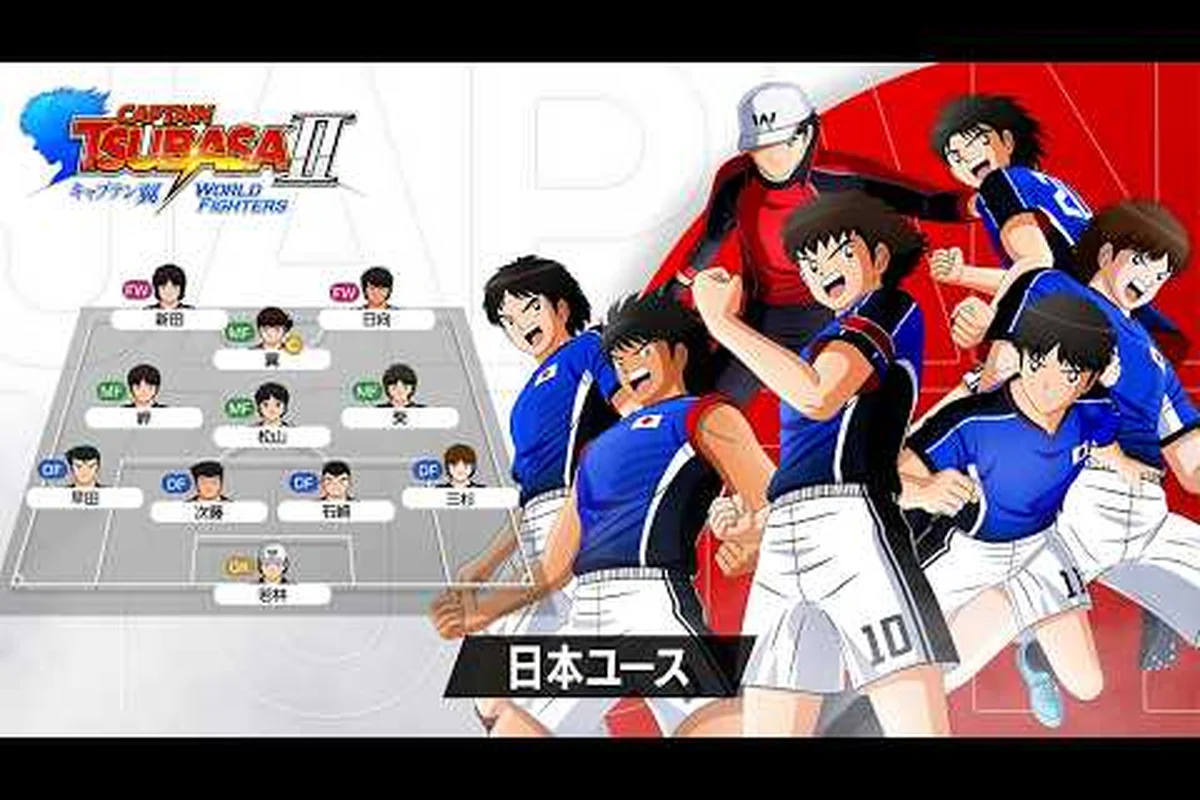
The Captain Tsubasa 2: World Fighters Japan national team is the story anchor, and Bandai Namco has packed it with the full Golden Generation lineup. Tsubasa Ozora leads with his Drive Shot and playmaking vision, but the real strength comes from how the supporting cast complements him. Misaki forms the Golden Duo with Tsubasa, Hyuga brings the Tiger Shot power, and Wakabayashi anchors the defense as the SGGK (Super Great Goalkeeper).
What makes Japan interesting in this entry is the balance across all three zones. The midfield trio of Tsubasa, Misaki, and Aoi Shingo gives you multiple creative outlets, while the defensive pairing of Jito and Igawa provides physical presence against stronger forwards. Wakabayashi's reflexes are top-tier, but his distribution out of the back is what starts most of your counter-attacks.
| Position | Player | Signature Move | Role |
|---|---|---|---|
| GK | Wakabayashi | SGGK Save | Last line of defense |
| DF | Jito | Power Block | Physical anchor |
| MF | Tsubasa | Drive Shot | Playmaker and scorer |
| MF | Misaki | Golden Duo Combo | Creative support |
| FW | Hyuga | Tiger Shot | Clinical finisher |
The team comparison between Japan and the top European sides shows a clear pattern: Japan wins on flexibility, while Brazil and Germany win on raw individual quality. Japan's formation shifts fluidly between a 4-3-3 and a 3-5-2 depending on whether you need more attacking width or midfield control, and that adaptability is what makes them the best choice for learning the game's mechanics. For a deeper look at how each player develops over a campaign, check the character growth guide that breaks down stat progression and unlockable versions.
Brazil, Germany, and the European Powerhouses Compared
Natureza, Carlos Santana, and Salinas: Brazil's Core Triangle
Brazil's tournament dominance hinges on the Natureza-Carlos Santana-Salinas triangle. Natureza drives creative midfield play, Santana provides the finishing threat, and Salinas anchors the defense as a rock-solid goalkeeper. This trio creates a balanced structure where offensive pressure from Natureza and Santana is backed by Salinas' reliability in goal. The synergy between these three players forms the tactical foundation of Brazil's playstyle, making them the team to beat in the World Youth tournament bracket.
Diaz, Levin Yul, and Mark Owairan: Regional Playstyle Variations
Argentina's Juan Diaz drives a relentless attacking system, while Sweden's Levin Yul and Saudi Arabia's Mark Owairan represent distinct regional approaches. Diaz's aggressive forward play contrasts with Levin Yul's more measured technical style, and Owairan brings a physical presence to Saudi Arabia's setup. These variations mean no two teams play alike, forcing players to adapt their strategy based on opponent tendencies. Understanding these differences is critical for tournament bracket planning, as mismatches in playstyle often decide close matches.
Brazil enters the tournament as the favorite, and the reasoning is simple: Natureza is the most complete forward in the game. His combination of speed, dribbling, and finishing makes him a constant threat, and pairing him with Carlos Santana gives you two elite scoring options. Salinas in goal is the best pure shot-stopper in the bracket, which means Brazil rarely concedes cheap goals.
Germany plays a completely different style under Karl-Heinz Schneider. The Fire Shot striker is a physical presence who thrives on direct play, and the German midfield supports him with quick vertical passing. France brings flair through El Cid Pierre and Louis Napoleon, while the Netherlands relies on Brian Cruyfford's technical mastery to control possession. Each of these teams has a distinct identity, and the Captain Tsubasa 2: World Fighters team comparison shows that no single squad dominates every category.
| Team | Star Player | Core Strength | Weakness |
|---|---|---|---|
| Brazil | Natureza | Elite attack, best GK | Midfield depth |
| Germany | Schneider | Physical direct play | Creativity |
| France | El Cid Pierre | Flair and technique | Defensive gaps |
| Netherlands | Cruyfford | Possession control | Finishing |
| Argentina | Diaz | Dribble-heavy attack | Team cohesion |
Argentina's Diaz is the standout dribbler in the game, and his solo runs can break down even organized defenses. The trade-off is that Argentina's supporting cast is weaker than the top three, so you need to feed Diaz consistently to make the system work. Sweden's Levin Yul offers a similar profile with slightly less flash but more reliability in the final third, while Uruguay brings a gritty, defensive approach that frustrates possession-based teams.
Original Additions and Unlock Teams Explained
The original national teams are the biggest talking point for long-time fans, because they represent territory the manga never covered. USA, Canada, and Indonesia were all supervised by creator Yoichi Takahashi, which means their designs and playstyles carry his signature attention to detail. The Bandai Namco EU site confirms these squads are built around distinct tactical identities rather than just being stat clones of existing teams.
The Captain Tsubasa 2: World Fighters unlock teams structure is straightforward for the main roster, but the pre-order bonus adds a twist. Players who pre-order get early access to the Brazil Youth team, which is a separate squad from the main Brazil national team. This youth version features younger versions of the Brazilian stars with different stat distributions, giving you a taste of the team before the full tournament opens up.
-
All 22 national teams are available through standard gameplay progression
-
Sao Paulo FC unlocks after completing the World Youth arc story mode
-
Brazil Youth team is the pre-order early unlock bonus
-
Coming-soon slot suggests at least one more team via DLC
-
Season Pass adds six DLC characters through August 2027
The Africa teams deserve special attention because Cameroon and Senegal bring physical, athletic playstyles that punish slower European sides. Cameroon's forward line is built around pace and power, while Senegal's midfield presses aggressively to force turnovers high up the pitch. These teams are excellent choices for players who prefer a high-energy, pressing game rather than patient possession football. If you want to know exactly how the Brazil Youth squad plays before committing to the pre-order, the Brazil youth team guide covers their formation and key players in detail.
Tournament Bracket Structure and Match Flow
The Captain Tsubasa 2: World Fighters tournament teams follow a structured bracket that mirrors the real World Cup format, which means group stage matches feed into knockout rounds. The group draw is randomized each playthrough, so you cannot rely on a fixed path to the final. That randomness is a double-edged sword because it keeps every run fresh, but it also means you need a squad that handles multiple playstyles.
The bracket structure breaks down into four stages, and each one demands a different approach. The group stage is about consistency and goal difference, while the knockout rounds punish a single mistake. The quarterfinals and semifinals are where team chemistry matters most, because the AI ramps up its tactical adjustments and starts targeting your defensive weaknesses.
| Tournament Stage | Matches | Key Challenge |
|---|---|---|
| Group Stage | 3 matches | Goal difference matters |
| Round of 16 | 1 match | First knockout pressure |
| Quarterfinals | 1 match | AI tactical adjustments |
| Semifinals | 1 match | Stamina management |
| Final | 1 match | Full squad rotation |
The World Youth finals are where the game's difficulty peaks, and the Japan vs Brazil matchup is the one most players will see if they follow the story path. Brazil's attacking trio of Natureza, Santana, and their supporting wingers creates constant pressure, so you need to be deliberate with your defensive positioning. The Japan vs Brazil walkthrough breaks down the specific tactics that work against Brazil's formation, including when to press high and when to sit deep.
Team Selection Strategy and Recommendations
Choosing the right team for your playstyle is the difference between a smooth tournament run and a frustrating early exit. The Captain Tsubasa 2: World Fighters every team has a distinct identity, and matching that identity to your preferred approach matters more than raw stats. Players who love controlling possession should lean toward the Netherlands or France, while those who prefer direct, physical play will find Germany and Cameroon more comfortable.
For beginners, Japan is the safest starting point because their balanced stats and flexible formation let you experiment without being punished. The Golden Duo combo between Tsubasa and Misaki is forgiving to execute, and Wakabayashi covers defensive mistakes that would be fatal with weaker goalkeepers. Intermediate players should try Brazil to understand how elite individual quality changes the tactical calculus, while advanced players can challenge themselves with the original additions like USA or Indonesia.
-
Beginner pick: Japan for balanced mechanics and forgiving gameplay
-
Possession style: Netherlands or France for midfield control
-
Direct attack: Germany or Cameroon for physical play
-
Solo carry: Argentina with Diaz as your primary outlet
-
Defensive grind: Uruguay or Saudi Arabia for low-scoring matches
The team abilities system adds another layer to squad selection, because each team has unique passive bonuses that activate under specific conditions. Brazil's ability boosts finishing when you hold possession in the final third, while Germany's ability strengthens physical duels when you win the first tackle of a sequence. Understanding these passives is crucial for the Captain Tsubasa 2: World Fighters team comparison, because two teams with similar stats can play completely differently based on their ability triggers.
Frequently Asked Questions
How many teams are in Captain Tsubasa 2: World Fighters?
The game launches with 22 national teams plus the Sao Paulo FC club team, and the official site lists one coming-soon slot that suggests at least one more squad. The Season Pass also schedules six DLC characters through August 2027, which could expand the roster further.
What is the best team for beginners in Captain Tsubasa 2: World Fighters?
Japan is the recommended starting point because their balanced stats and flexible formation let you learn the game's mechanics without being punished. The Golden Duo between Tsubasa and Misaki is forgiving to execute, and Wakabayashi's goalkeeping covers defensive mistakes that would be fatal with weaker squads.
How do I unlock the Brazil Youth team?
The Brazil Youth team is the pre-order early unlock bonus, giving you access to a young Brazilian squad before the main tournament teams open up. This version features younger versions of the Brazilian stars with different stat distributions, so it plays distinctly from the main Brazil national team.
Are the original teams like USA and Canada canon?
The original national teams were supervised by creator Yoichi Takahashi, which means their designs and playstyles carry his signature attention to detail. They expand the tournament bracket beyond the manga's scope, giving players more variety in exhibition matches and alternative story paths.
Which team has the best goalkeeper in the game?
Brazil's Salinas is widely considered the best pure shot-stopper in the bracket, with elite reflexes and positioning that rarely concedes cheap goals. Wakabayashi for Japan is a close second, with slightly better distribution out of the back that starts counter-attacks more effectively.