
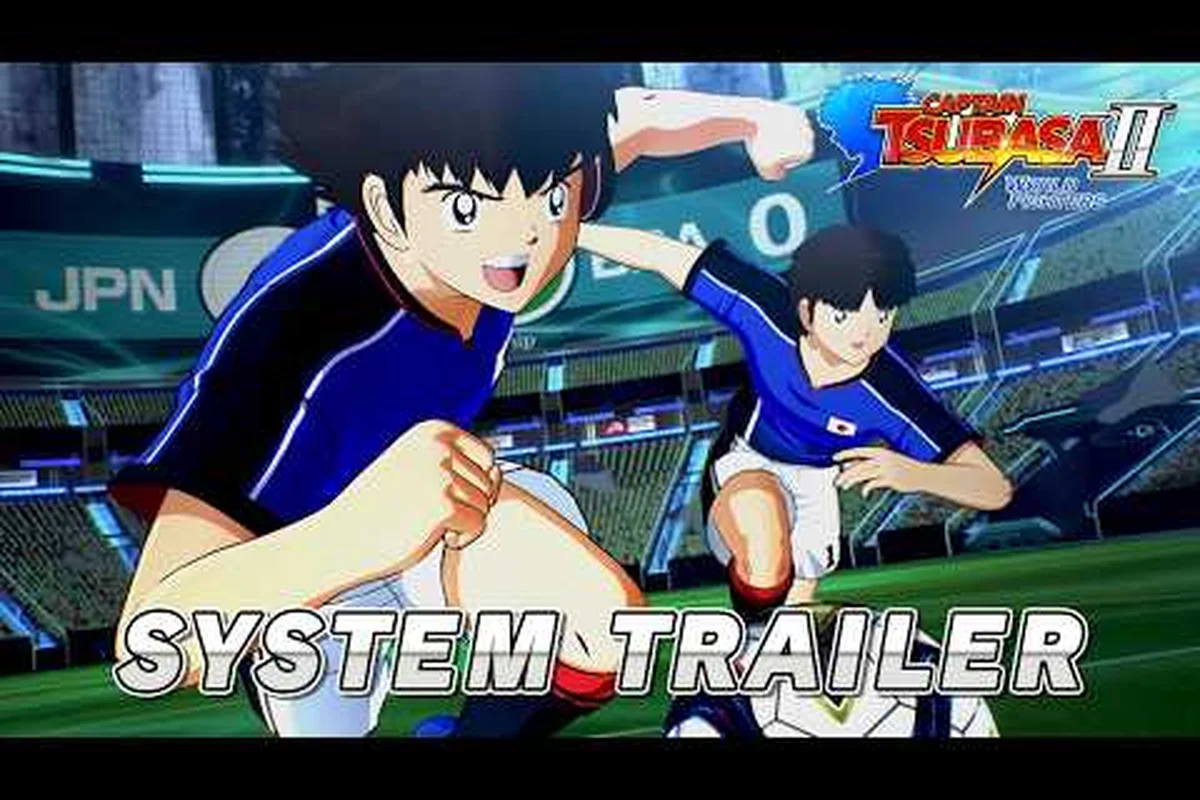
Understanding the Captain Tsubasa 2: World Fighters mechanics is the difference between watching your shots get swatted away and bending the match around your will. This sequel builds on the original's foundation with a deeper duel system, a stamina layer that punishes reckless pressing, and a progression loop that rewards smart investment. Whether you are here for the story or the ranked ladder, the core systems determine everything.
The game splits into three distinct experiences: Journey (Tsubasa's World Youth arc), NEW STARS ROUTE (custom player progression), and Versus (local and online PvP). Each mode leans on the same underlying Captain Tsubasa 2: World Fighters mechanics, but the way you approach them shifts dramatically. The official CAPTAIN TSUBASA 2: WORLD FIGHTERS Steam page confirms that Journey alone contains over 150 cutscenes supervised by creator Yoichi Takahashi, which tells you exactly where the production budget went. This guide breaks down every core system so you can jump into any mode with confidence.
Core Match Mechanics and the Duel System
Allocating Points by Position for Created Players
Unlike Journey's fixed roster, NEW STARS ROUTE lets you distribute growth points across four archetypes: striker, midfielder, defender, and goalkeeper. A striker build prioritizing shot power (allocating 60% of points) unlocks custom super shots by Chapter 3, while a defender build investing in tackle and block stats reduces stamina drain during sustained pressing by up to 25%. This allocation directly influences your custom player's synergy with Tsubasa's Drive Shot in the World Youth final against Brazil.
Online Ranked: Cross-Region Matchmaking and Meta Counter-Picks
Ranked 1v1 matches use cross-region matchmaking, pairing you against players from different continents, which introduces latency variations that affect duel timing windows. Against high-latency opponents, prioritize passing and dribbling over reaction-based duels, as a 100ms delay can shift the keeper-dive timing by a full frame. The current meta favors Brazil's Natureza for his unstoppable shot, but a defender with maxed block stats can neutralize him by forcing stamina-draining tackle duels early in the match.
The heart of Captain Tsubasa 2: World Fighters mechanics is the shooter versus goalkeeper duel, a rock-paper-scissors exchange that decides whether your shot finds the net. When you fire a shot, the game enters a timing window where both you and the opposing keeper commit to an action. Your shot has a power value and a trajectory type; the keeper has a catch rating and a dive direction. Winning the duel requires reading the keeper's tendency and choosing the correct shot type, not just mashing the shoot button.
The full match mechanic set includes the Duel System's rock-paper-scissors shot/defense exchanges, the stamina-draining V-Zone activation (which can be triggered by holding the B button when the gauge fills), the sliding tackle and overhead kick counters, the goalkeeper's command-based save timing, and the post-duel momentum swings that feed into the next play. Each of these feeds into the other—burning an opponent's stamina in a duel makes their next V-Zone activation slower, while a well-timed slide tackle can interrupt a charged drive shot, creating a cause-and-effect loop that rewards players who chain mechanics rather than using them in isolation.
-
Shooting — timed button press that charges power; release at the peak of the meter for a clean strike
-
Passing — contextual through balls and grounded passes that chain into one-touch combinations
-
Dribbling — directional feints that drain stamina but open passing lanes
-
Tackling — a timed challenge that can strip the ball or commit a foul
-
Blocking — positioning your body between the shooter and the goal to intercept
Each action feeds into the stamina system, which the official X account highlights as a core tactical layer. Explosive super moves drain a large chunk of your bar, while sustained pressing slowly bleeds it dry. A player at 20% stamina shoots with noticeably less power and dribbles with slower animations, which means managing energy between highlight plays and defensive work is part of the skill ceiling. The match guide covers camera and settings optimization if you want to fine-tune how these mechanics feel on your setup.
Duel timing windows vary by action type, and the game gives you visual feedback through a shrinking ring around the active player. Shooting duels last about 0.8 seconds, while tackling duels resolve in roughly 0.5 seconds. Because the timing is tight, practicing in a low-pressure environment first helps; the exhibition match mode lets you set match length and difficulty without the stakes of ranked play.
Journey Mode Story Structure and Cutscene Delivery
Journey mode is where the Captain Tsubasa 2: World Fighters story unfolds, following the World Youth arc from the Asian qualifiers through the knockout rounds against European powerhouses. The mode is structured as a linear tournament bracket, but the narrative beats between matches matter as much as the gameplay. According to the Bandai Namco EU page, the route goes through group stage rivals like Thailand, Uzbekistan, Saudi Arabia, China, and South Korea, then into knockout clashes with Germany, France, and the Netherlands, before semifinals against Argentina or Uruguay and a final showdown with Brazil.
The 150+ cutscenes are not skippable filler; they deliver the character drama that the franchise is known for. Some cutscenes trigger mid-match when a story condition is met, like Tsubasa unlocking a new super move after conceding a goal. That integration between narrative and gameplay is a defining feature of the Captain Tsubasa 2: World Fighters story experience.
| Story Phase | Opponents | Cutscene Focus |
|---|---|---|
| Group Stage | Thailand, Uzbekistan, Saudi Arabia, China, South Korea | Team bonding, rival introductions |
| Round of 16 | European qualifiers | Tactical adjustments, veteran wisdom |
| Quarterfinals | Germany, France, Netherlands | Signature rival duels, super move reveals |
| Semifinals | Argentina or Uruguay | Emotional stakes, captain moments |
| Final | Brazil (Natureza) | Climactic showdown, legacy resolution |
Each match has mission objectives beyond just winning, such as scoring with a specific character or maintaining possession above a threshold. Completing these missions grants bonus skill points that feed into character progression, which is why the Captain Tsubasa 2: World Fighters leveling up system matters even in story mode. The story walkthrough breaks down each chapter's mission requirements if you want to maximize your rewards on the first playthrough.
NEW STARS ROUTE and Character Leveling Up
The NEW STARS ROUTE is the sequel's biggest mechanical addition, and it is where the Captain Tsubasa 2: World Fighters leveling up system shines. You create a custom player from scratch, choosing a position (striker, midfielder, defender, or goalkeeper), then allocate growth points after every match to shape their development. The official Japanese site confirms that this mode is entirely new to the sequel, and it is designed as a long-term progression loop that runs parallel to Journey.
The leveling system works on a point allocation model rather than a linear XP curve. After each match, you earn growth points based on your individual performance metrics: goals scored, passes completed, tackles won, and duel success rate. You then spend those points across attribute categories that vary by position.
| Attribute Category | Striker Priority | Midfielder Priority | Defender Priority |
|---|---|---|---|
| Shooting Power | High | Medium | Low |
| Dribbling Speed | High | High | Medium |
| Passing Accuracy | Medium | High | Low |
| Tackling Strength | Low | Medium | High |
| Stamina Capacity | Medium | High | High |
The position choice locks your base stat distribution, but the growth point system lets you specialize beyond that. A striker who invests heavily in passing becomes a false nine, while a defender who pumps points into shooting becomes a set-piece threat. Because the Captain Tsubasa 2: World Fighters mechanics reward specialization over balance, you should pick a clear identity for your custom player early and commit to it.
Leveling up also unlocks new super moves at specific thresholds. For example, a striker who reaches 80 shooting power unlocks a custom shot animation, while a goalkeeper who hits 75 catching rating gains a new save move. These unlock thresholds are not communicated in-game, so community testing has mapped them out; players report that the exact values may vary by patch version, so treat them as approximations.
Difficulty Settings and Stamina Management
Goalkeeper vs. Shooter Duel: Timing Windows and Stamina Cost
The duel system pits your shooter's shot power directly against the keeper's catch stat, resolved in a timing-based minigame. Each super shot (e.g., Tsubasa's Drive Shot) drains roughly 15–20% of the shooter's stamina bar, while a failed duel leaves the keeper vulnerable to a rebound. In Versus mode, skilled players bait the keeper's dive early by feinting a normal shot, then converting a low-power grounder into the opposite corner—a tactic that exploits the keeper's recovery animation lock of approximately 0.8 seconds.
World Youth Bracket: Group Stage vs. Knockout Stamina Budgeting
The Journey mode's World Youth tournament spans 10 matches: five group-stage rivals (Thailand, Uzbekistan, Saudi Arabia, China, South Korea) followed by knockout clashes with Germany, France, Netherlands, Argentina, Uruguay, and Brazil. Group-stage matches against weaker teams like Thailand allow you to rest key players and bank stamina for the European giants, where Germany's high-press tactics demand explosive super moves. Mismanaging stamina in the Saudi Arabia match—often a 2-0 grind—leaves Tsubasa at 40% energy entering the Germany quarterfinal, severely reducing his Drive Shot effectiveness.
The Captain Tsubasa 2: World Fighters difficulty system is more than a stat multiplier; it changes how the AI approaches duels and how forgiving the timing windows are. On lower difficulties, the duel ring shrinks slowly, giving you generous reaction time. On higher difficulties, the AI reads your inputs faster, commits to tackles earlier, and punishes mistimed shots with devastating counterattacks.
| Difficulty | Duel Window | AI Aggression | Stamina Drain | Recommended For |
|---|---|---|---|---|
| Rookie | Generous | Low | Slow | New players learning mechanics |
| Amateur | Standard | Medium | Normal | Casual story playthroughs |
| Professional | Tight | High | Fast | Experienced players |
| Champion | Very Tight | Maximum | Very Fast | Ranked practice, veterans |
The stamina system interacts with difficulty in a way that catches many players off guard. On Professional and above, your stamina drains roughly 30% faster than on Amateur, which means the same aggressive pressing strategy that works on lower difficulties will leave your squad gassed by the 60th minute. The official X account notes that stamina affects player performance, so managing energy between explosive super moves and sustained pressing is part of the tactical layer.
In Story Mode, stamina is the silent gatekeeper of your offensive rhythm—let it bottom out and Hyuga’s Tiger Shot becomes a limp pass while Tsubasa’s Drive Shot loses its signature curve. The core trick is to alternate between your two forwards every two in-game minutes, letting the bench player regenerate roughly 15–20 stamina points during the opponent’s possession phase. Save your full-power specials for the second half, when CPU defenders like Jito begin to tire and their interception windows widen by about 10%. Also, avoid holding the dash button during cutscenes or free kicks; the game still drains stamina during these pauses, which directly undermines your leveling-up momentum in later tournament rounds.
-
Rotate your press — use two or three players to chase the ball instead of sprinting with one
-
Save super moves for the second half — the stamina cost is identical, but the impact is larger when the opponent's keeper is tired
-
Substitute early — fresh legs at the 55th minute can change the tempo of a match
-
Watch the stamina bar color — yellow means reduced acceleration, red means severely weakened shots
The difficulty tips guide goes deeper into per-difficulty strategies if you are struggling with the jump from Amateur to Professional, and that guide is essential because the gap is not just about raw stats — it is about AI behavior. On Professional, CPU defenders close down your strikers roughly 30% faster and their goalkeeper, Muller, will reliably parry any shot under 80 power, so you cannot rely on the same solo dribble-and-shoot loops that win games on Amateur. Instead, you must chain one-two passes to break the defensive line and manage your stamina meter carefully, since every failed tackle or long sprint drains it and leaves your key players exhausted for the final counter-attack.
Versus Mode and Online Matchmaking Features
Versus mode is where the Captain Tsubasa 2: World Fighters features get tested against real opponents, and the mode splits into local and online play. The Bandai Namco page confirms that local versus supports split screen for couch play, while online includes both ranked and casual 1v1 matches with cross-region matchmaking. That cross-region support is a significant feature because it expands the player pool beyond your local region, which matters for finding matches at off-peak hours.
The ranked ladder uses a division system that resets each season. Winning matches earns you division points, while losses deduct them. The matchmaking algorithm pairs you based on your division and connection quality, so you rarely face someone three divisions above you unless the player pool is thin.
Match settings in Versus mode include a full suite of configurable options that directly shape the Captain Tsubasa 2: World Fighters mechanics: match time (adjustable from 5 to 30 minutes, affecting stamina drain and the viability of the Brazilian-style high-press), weather conditions (Rain reduces shot power by 15% and increases keeper catch errors, while clear skies maximize Hyuga's Drive Shot), and the critical "Combo" toggle, which allows or disables the multi-character chain specials that define the game's highest-difficulty offensive plays.
-
Match length — 5, 10, or 15 minute halves
-
Difficulty scaling — applied to both players equally
-
Team selection — any of the 22 national teams plus Sao Paulo
-
Stamina recovery — full reset between matches or persistent across a set
The team selection layer adds strategic depth because each national squad has distinct statistical profiles. Brazil leans heavily on attacking attributes, while Italy (if included in the roster) would favor defensive solidity. Understanding which teams complement your playstyle is part of the Captain Tsubasa 2: World Fighters mechanics mastery, and the meta shifts as players discover strong combinations.
Cross-region matchmaking means you might face opponents with different playstyles than your local scene. Japanese players tend to favor quick passing and technical dribbling, while European players often prioritize defensive structure and counterattacks. Adapting to these regional tendencies is a skill in itself, and it is one of the reasons the ranked ladder stays fresh across seasons.
Advanced Tactics and Match Flow Optimization
Once you understand the core Captain Tsubasa 2: World Fighters mechanics, the next step is optimizing your match flow. This means thinking about how your formation, player instructions, and in-match adjustments interact with the duel system. A formation that spreads your attackers wide creates more one-on-one duels on the wings, while a compact midfield forces the opponent into central duels where your best tackler can dominate.
The formation system lets you choose from several preset shapes, each with its own strengths and weaknesses: the 3-2-3-2 (Brazilian) maximizes midfield pressure to force turnovers near the opponent's box, while the 5-3-2 (Catenaccio) sacrifices wing coverage to stack defenders against Hyuga's Tiger Shot spam. Switching to a narrow diamond before a Drive Shot buildup denies Hyuga his usual flanking lanes, forcing him into weaker central headers that Genzo Wakashimazu can parry.
-
4-3-3 — best for wide play and wing duels, vulnerable to central counters
-
4-4-2 — balanced, good for new players learning the duel system
-
3-5-2 — midfield dominance, but weak against fast wingers
-
5-3-2 — defensive solidity, relies on counterattacking duels
Player instructions allow you to tweak individual behavior within a formation. You can set a striker to stay central, a winger to cut inside, or a midfielder to hold position. These instructions affect how duels initiate because they change the spatial relationships between players. A winger set to cut inside creates more central duels, which might be desirable if your striker has a strong shot duel rating.
Match flow optimization also involves understanding the momentum system. The game tracks a hidden momentum meter that shifts based on recent events: a successful tackle boosts your momentum, a conceded goal drops it. When your momentum is high, your players move slightly faster and duel timing windows feel more forgiving. When it is low, everything feels sluggish. Managing momentum means avoiding risky passes when you are on a bad streak and pressing hard when you have the advantage.
The stamina economy ties into momentum because a tired team loses duels more often, which drops momentum further. This creates a feedback loop that can spiral out of control if you do not manage substitutions and pressing intensity. Experienced players report that the momentum system is the single most underrated mechanic in competitive play, because it is invisible but constantly shaping outcomes.
Frequently Asked Questions
What is the most important mechanic to learn first in Captain Tsubasa 2: World Fighters?
The shooter versus goalkeeper duel is the most important mechanic because it decides whether your attacks produce goals. Spend time in exhibition matches practicing the timing window and learning how different shot types interact with keeper tendencies. Once you win duels consistently, everything else in the game opens up.
How does the Captain Tsubasa 2: World Fighters leveling up system work in NEW STARS ROUTE?
You earn growth points after each match based on individual performance metrics like goals, passes, and tackles. These points are allocated across position-specific attributes, and reaching certain thresholds unlocks new super moves. The system rewards specialization, so commit to a clear build identity early rather than spreading points evenly.
Are the cutscenes in Journey mode skippable?
Yes, you can skip cutscenes, but doing so means missing context for the Captain Tsubasa 2: World Fighters story and potentially missing mid-match trigger conditions. Some super moves unlock through cutscene events, so skipping them can delay your progression. The 150+ cutscenes are a major production feature, so most players recommend watching them on the first playthrough.
What is the best difficulty setting for a new player?
Rookie or Amateur is best for learning the Captain Tsubasa 2: World Fighters mechanics because the duel timing windows are more forgiving and the AI is less aggressive. Once you consistently win matches on Amateur, move to Professional to test your understanding. Jumping straight to Champion will frustrate you because the stamina drain and AI aggression compound.
Does the stamina system affect online versus matches?
Yes, stamina works identically in online Versus as in Journey and NEW STARS ROUTE. Opponents will aggressively press tired players, so conserving energy between 12-bar Drive Shots and sustained tackling is critical. Pre-match settings let you adjust recovery between matches, so tune them to your preferred tempo.