
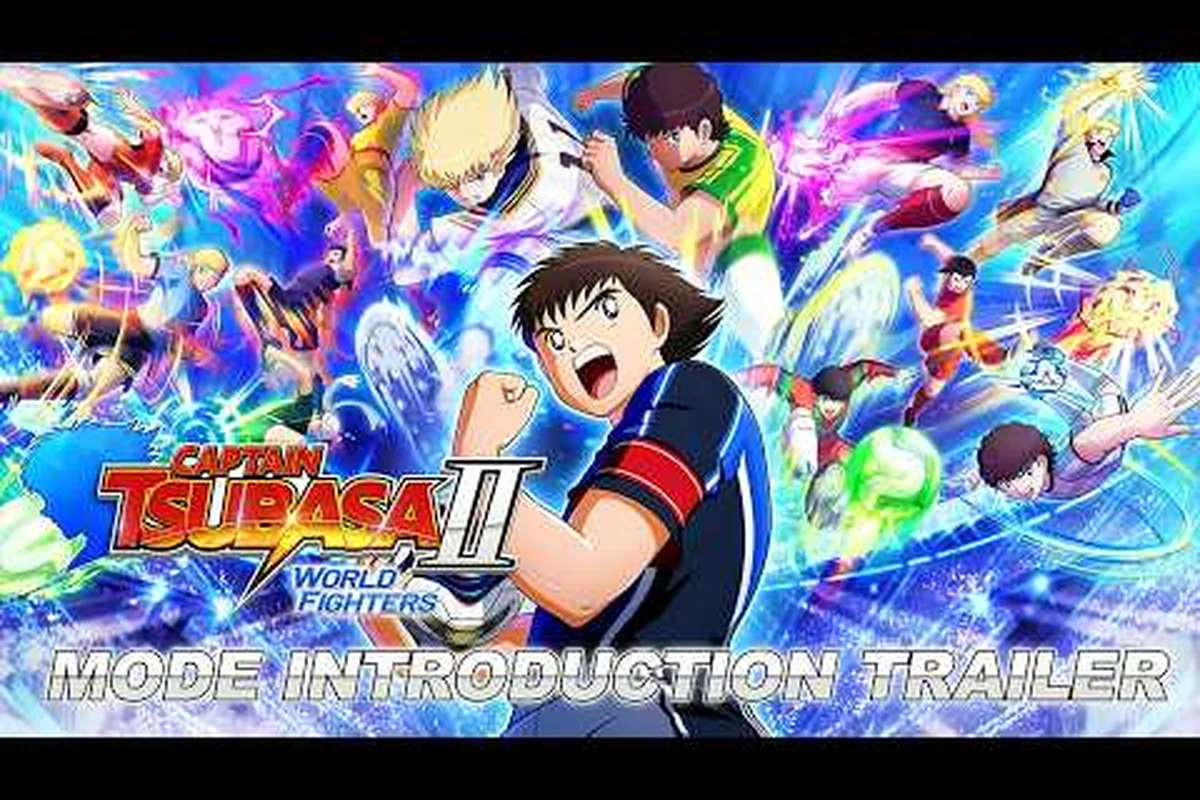
Understanding the Captain Tsubasa 2: World Fighters game modes is the first step to getting real value from Bandai Namco's soccer action sequel. Whether you want to relive Tsubasa's World Youth arc, build your own player from scratch, or test your skills against human opponents, each mode serves a completely different purpose. This breakdown covers every Captain Tsubasa 2: World Fighters game mode, what you will actually do inside each one, and which mode fits your playstyle best.
The game launched with three core pillars that define the entire experience: Journey for story-driven solo play, New Stars Route for character creation and progression, and Versus for competitive matches against friends or online opponents. According to the official CAPTAIN TSUBASA 2: WORLD FIGHTERS Steam page, these modes are supervised by creator Yoichi Takahashi, which means the story content carries real narrative weight rather than feeling like a tacked-on afterthought. That distinction matters because it shapes how much time you will invest in each mode and what rewards you can expect to carry between them.
Journey Mode: The World Youth Arc Story Campaign
Journey is the heart of the single-player experience, adapting the World Youth arc with over 150 cutscenes that push the story forward between matches. This Captain Tsubasa 2: World Fighters Journey mode follows Tsubasa and the Japan national team as they battle through the World Youth tournament, and it is the closest thing the game has to a traditional story campaign. The mode is fully supervised by creator Yoichi Takahashi, so the narrative beats stay faithful to the source material while still fitting the game's match-based structure.
The tournament bracket in Journey mode follows a specific path that determines who you face and when. Based on the official Bandai Namco EU overview, the progression breaks down into distinct phases that escalate in difficulty:
-
Group stage rivals: Thailand, Uzbekistan, Saudi Arabia, China, and South Korea form the early opposition, and these matches teach you the fundamentals of the game's match mechanics without overwhelming you.
-
Knockout rounds: European giants Germany, France, and Netherlands appear once you advance, and these matches demand a much better understanding of stamina management and super move timing.
-
Semifinals: Argentina and Uruguay provide the final hurdle before the championship match, with their star players testing your defensive organization.
-
Climactic final: Brazil and Natureza await at the end, and this match is widely considered the hardest single encounter in the entire Journey campaign.
Each match in Journey mode uses defined match settings that you can adjust before kickoff, including difficulty level, match length, and team selection. The stamina system plays a huge role here because explosive super moves drain energy quickly, and the official X account for the game confirms that managing energy between flashy attacks and sustained pressing is part of the tactical layer. If you want a complete chapter-by-chapter breakdown of every opponent and unlock condition, the Journey all chapters walkthrough covers the full route in detail.
Match Settings and Difficulty Tuning
Before every Journey match, you can adjust several parameters that directly affect how challenging the experience feels. The difficulty setting ranges from casual-friendly options that let you enjoy the story to punishing modes that require near-perfect execution. Match length is equally important because shorter matches reduce the impact of stamina management, while longer matches force you to think about player rotation and energy conservation across the full 90 minutes.
| Setting | Options | Impact on Gameplay |
|---|---|---|
| Difficulty | Easy / Normal / Hard / Expert | Affects opponent AI aggression, tackle success rates, and goalkeeper reaction speed |
| Match Length | Short / Standard / Full | Determines how much stamina management matters over the course of the match |
| Team Selection | Japan / Opponent / Custom | Lets you replay matches from the other side or set up custom scenarios |
| Super Move Usage | Unlimited / Limited / Disabled | Controls how often you can trigger explosive special moves |
The match length setting deserves special attention because it fundamentally changes how you approach each game. Short matches reward aggressive play and quick goals, while full-length matches require a more measured approach where stamina conservation becomes the difference between winning and losing. Community reports suggest that most players start with Standard length to learn the mechanics, then move to Full length once they understand the stamina system's nuances.
Progression and Replay Value
Journey mode rewards you with more than just story progression. Each completed match contributes to your overall team development, and replaying matches at higher difficulties unlocks additional content that you cannot get on a first playthrough. The mode also encourages experimentation because you can replay any chapter with different team selections, which changes the match dynamics completely.
The over 150 cutscenes in Journey mode are not skippable filler either. They advance character relationships, explain tactical decisions, and give context to why certain players perform differently in specific matches. For players who care about the narrative side of Captain Tsubasa, this is where the game's production values really shine. The mode also ties directly into the broader progression systems, so time spent in Journey contributes to your overall profile even if you later switch to other modes.
New Stars Route: Custom Player Creation and Progression
New Stars Route is entirely new to the sequel, and it represents the biggest departure from the original game's structure. This Captain Tsubasa 2: World Fighters New Stars Route mode lets you create a custom player who joins the Japan national team and fights alongside Tsubasa on the road to world victory. The character creation system is surprisingly deep, and the official Japanese website for the game confirms that position choices, growth point allocation, and long-term progression are all core to the mode's loop.
The custom player mode starts with the most important decision you will make: your position on the field. Each position has a completely different playstyle, stat priority, and role within the team structure:
-
Striker: Focuses on shooting power, finishing accuracy, and positioning inside the box. You will be the primary goal threat, which means learning when to trigger super shots and when to pass to better-positioned teammates.
-
Midfielder: Balances offensive and defensive duties, with emphasis on passing accuracy, dribbling, and stamina management. Midfielders touch the ball more than any other position, so your decision-making speed matters more than raw stats.
-
Defender: Prioritizes tackling, blocking, and positioning. You will spend most of your time stopping opposition attacks, which requires reading the opponent's movement patterns and timing your challenges correctly.
-
Goalkeeper: The most specialized role, focusing on shot-stopping, positioning, and the goalkeeper versus shooter duel system. You will face constant pressure, and your reflexes determine whether your team concedes or survives.
Growth Points and Character Development
Once you choose your position, the real progression begins. New Stars Route uses a growth point system where you allocate points to improve specific attributes as you play matches. The allocation strategy matters because you cannot max out everything, so you need to decide whether to build a specialized player or a well-rounded one.
| Attribute | Striker Priority | Midfielder Priority | Defender Priority | Goalkeeper Priority |
|---|---|---|---|---|
| Shooting | High | Medium | Low | Low |
| Passing | Medium | High | Medium | Low |
| Dribbling | Medium | High | Medium | Low |
| Tackling | Low | Medium | High | Low |
| Blocking | Low | Medium | High | Medium |
| Speed | High | Medium | Medium | Medium |
| Stamina | Medium | High | High | Medium |
| Reflexes | Low | Low | Medium | High |
The growth point allocation system rewards focused builds rather than trying to do everything. A striker who invests heavily in shooting and speed will outperform a jack-of-all-trades build in most match situations, even if the balanced player has slightly better overall stats. Community testing suggests that specialized builds are significantly more effective in both Journey and Versus modes, so resist the urge to spread your points too thin.
Long-Term Loop and Team Integration
New Stars Route is designed as a long-term progression mode, not a quick side activity. Your custom player levels up through matches, and the character progression system ensures that you always have something to work toward. The mode also integrates with the broader game structure because your custom player can be used in other modes once created, which adds meaningful replay value.
The leveling up mechanic in New Stars Route is what keeps players coming back. Each match grants experience points, and leveling up unlocks additional growth points that let you refine your build further. The loop is simple but effective: play matches, earn experience, allocate points, test your build, then repeat. For players who enjoy character-building mechanics, this mode can easily consume dozens of hours. If you want to know which position and build performs best in competitive play, the best striker and character creation guide breaks down the top-performing options.
Versus Mode: Local and Online Competitive Play
Versus mode is where Captain Tsubasa 2: World Fighters game modes shift from solo progression to competitive multiplayer. This mode supports both local split-screen play and online 1v1 PvP, giving you options whether you are on the couch with a friend or facing opponents from around the world. The official Bandai Namco Entertainment page confirms that online play includes ranked and casual 1v1 matches with cross-region matchmaking.
The match mechanics in Versus mode are identical to the other modes, which means shooting, passing, dribbling, tackling, blocking, and the goalkeeper versus shooter duel system all carry over. What changes is the opponent. Human players are far less predictable than AI opponents, which means you need to adapt your playstyle on the fly rather than relying on pattern recognition.
Online Matchmaking and Ranked Play
Online Versus mode splits into two distinct queues that serve different purposes. The ranked queue is for players who want competitive integrity, with matchmaking that pairs you against opponents of similar skill levels. The casual queue is more relaxed, letting you experiment with different teams and strategies without worrying about your ranking.
| Match Type | Queue | Best For | Matchmaking |
|---|---|---|---|
| Ranked 1v1 | Competitive | Testing your skills against equal opponents | Skill-based, cross-region |
| Casual 1v1 | Relaxed | Experimenting with teams and strategies | Looser matchmaking, faster queues |
| Local Versus | Offline | Playing with friends on the same screen | No matchmaking needed |
The cross-region matchmaking is a significant feature because it means you can find opponents at any hour, regardless of where you live. This is especially important for players in regions with smaller player populations, as it prevents the dead-queue problem that plagues many competitive games. The ranked system also provides tangible goals to work toward, which keeps the competitive loop engaging.
Team Selection and Match Settings
Versus mode gives you access to the full roster of 22 national teams plus Sao Paulo, which means you can experiment with different playstyles and team compositions. Each team has distinct strengths and weaknesses, so your team choice should complement your preferred playstyle rather than just picking your favorite country.
The 22 national teams plus Sao Paulo selection is one of the deepest rosters in any Captain Tsubasa game. Some teams excel at attacking play with elite strikers, while others are built around defensive solidity and counter-attacking. Learning which teams suit your style is a key part of succeeding in Versus mode. The match settings available in Versus mode also let you customize the experience, including match length and difficulty, though most competitive players stick with standard settings.
Stamina Management and Match Mechanics Across Modes
Regardless of which Captain Tsubasa 2: World Fighters game mode you choose, the stamina system is the single most important mechanic to understand. The official X account for the game confirms that stamina affects player performance, and managing energy between explosive super moves and sustained pressing is part of the tactical layer. This is not a minor detail; it is the difference between winning and losing close matches.
The stamina system works on a player-by-player basis, with each character having a stamina pool that depletes as they perform actions. Sprinting, tackling, shooting, and especially using super moves all drain stamina at different rates. When a player's stamina runs low, their performance drops significantly, which means they become slower, weaker, and more prone to mistakes.
Super Move Economy
Super moves are the flashiest part of Captain Tsubasa's gameplay, but they come at a steep stamina cost. Using a super shot or super tackle can drain a significant portion of a player's stamina bar, which means you cannot spam them endlessly. The key is learning when to use them for maximum impact rather than wasting them in low-value situations.
| Action | Stamina Cost | Best Use Case |
|---|---|---|
| Normal Pass | Low | Maintaining possession and building attacks |
| Sprint | Low per second | Creating space and chasing down opponents |
| Normal Shot | Medium | Testing the goalkeeper from distance |
| Tackle | Medium | Winning the ball in midfield |
| Super Shot | High | High-percentage scoring chances |
| Super Tackle | High | Breaking up dangerous attacks |
The super move economy is what separates good players from great ones. Knowing when to burn stamina on a super shot versus saving it for defensive actions requires constant awareness of both your stamina and your opponent's. Players who manage this well can dominate matches even with statistically inferior teams. The stamina system deep dive covers this mechanic in much greater detail, including specific stamina values and recovery rates.
Goalkeeper Versus Shooter Duel
One of the most distinctive mechanics in the game is the goalkeeper versus shooter duel system. When a shot is taken, the game enters a quick-time event where both the shooter and goalkeeper inputs affect the outcome. This adds a layer of skill to finishing that goes beyond simply pressing the shoot button at the right time.
The goalkeeper versus shooter duel system rewards timing and anticipation. Shots that are well-timed and placed in the corners are much harder to save, while poorly timed shots give the goalkeeper a significant advantage. This mechanic applies across all modes, so mastering it in Journey mode will directly improve your performance in Versus mode.
Choosing the Right Mode for Your Playstyle
With three distinct modes and multiple match types, the question becomes which Captain Tsubasa 2: World Fighters game mode you should focus on first. The answer depends entirely on what you want from the game, and each mode serves a different type of player. The good news is that the modes are not mutually exclusive, and most players will end up spending time in all of them.
For players who care about story and character development, Journey mode is the obvious starting point. The over 150 cutscenes and faithful adaptation of the World Youth arc make it the most narrative-driven experience in the game. It also serves as a tutorial of sorts, because the escalating difficulty of the tournament bracket teaches you the mechanics gradually rather than throwing you into the deep end.
For players who enjoy character building and long-term progression, New Stars Route is the most rewarding mode. The custom player creation system, growth point allocation, and leveling loop provide a satisfying sense of progression that keeps you coming back. The mode also has the highest replay value because you can create multiple players with different builds and positions.
For competitive players, Versus mode is where the game truly shines. The ranked queue provides a meaningful ladder to climb, and the cross-region matchmaking ensures you can always find opponents. The depth of the match mechanics means there is a high skill ceiling, and mastering the stamina system and duel mechanics gives you a real edge over less experienced players.
Recommended Progression Path
If you are new to the game, the best approach is to start with Journey mode on Standard difficulty to learn the mechanics, then move to New Stars Route to build your custom player, and finally test your skills in Versus mode. This progression ensures you understand the fundamentals before you face human opponents who will punish mistakes.
| Player Type | Start With | Move To | End Goal |
|---|---|---|---|
| Story-focused | Journey (Easy/Normal) | Journey (Hard/Expert) | Complete all chapters |
| Builder | New Stars Route | Journey + New Stars Route | Max out custom player |
| Competitive | Journey (Normal) | Versus (Casual) | Versus (Ranked) |
| Completionist | Journey (Normal) | All modes | 100% completion |
The recommended progression path above is based on community feedback and testing, and it works well for most players. However, do not feel locked into this order. If you want to jump straight into competitive play, Versus mode is accessible enough that you can learn on the job, even if you will lose some early matches while you figure out the mechanics.
Frequently Asked Questions
What is the best mode for new players in Captain Tsubasa 2: World Fighters?
Journey mode is the best starting point because it gradually introduces mechanics through the World Youth tournament bracket. The early group stage matches against Thailand and Uzbekistan are forgiving enough to learn the basics, while later matches against Germany and Brazil push you to master the stamina system and duel mechanics.
How long does it take to complete New Stars Route?
The New Stars Route custom player mode takes roughly 15-20 hours to reach max level with a single build, depending on how efficiently you play matches. Creating additional players with different positions adds more time, and the mode has strong replay value because each position requires a completely different approach.
Can I use my custom player from New Stars Route in Versus mode?
Yes, your custom player can be used in Versus mode once created. This is one of the biggest draws of the New Stars Route mode because it lets you take your carefully built player into competitive matches. The catch is that your custom player's stats carry over, so a well-developed player has a significant advantage.
Does Versus mode support cross-region matchmaking?
Yes, the online Versus mode includes cross-region matchmaking for both ranked and casual 1v1 matches. This means you can find opponents at any hour regardless of your location, which is especially valuable for players in regions with smaller player populations. The matchmaking system pairs you with opponents of similar skill in ranked play.
What is the goalkeeper versus shooter duel system?
The goalkeeper versus shooter duel is a quick-time event that triggers on every shot, where both the shooter's timing and the goalkeeper's input determine the save outcome. Well-placed shots with precise timing are significantly harder to save, making this duel a core skill layer across Journey, New Stars Route, and Versus matches.