
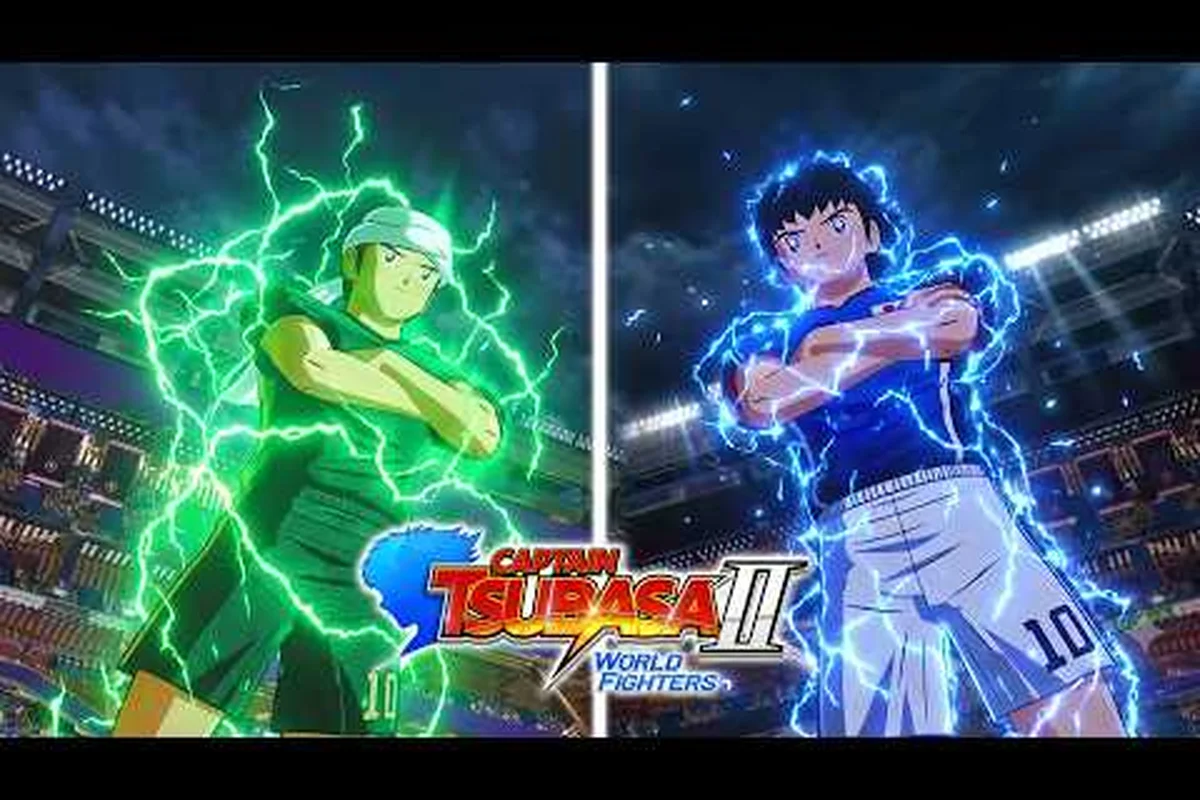
Every match in CAPTAIN TSUBASA 2: WORLD FIGHTERS asks more than just a win. The Journey mode tracks specific mission objectives per chapter, from margin-of-victory demands to combination-play triggers, and missing them locks story content. This Captain Tsubasa 2: World Fighters mission guide breaks down each chapter's win conditions, the teams you face, and the tactical adjustments that turn a narrow victory into a full clear.
Understanding the mission structure matters because rewards and story branches hinge on meeting secondary goals, not just the final whistle. Whether you are chasing a 100 percent walkthrough or just want to survive the Brazil final, knowing what each chapter demands before kickoff saves you from replaying 20-minute matches. Let's map the full Journey route. ls, not just the final whistle. Whether you are chasing a 100 percent walkthrough or just want to survive the Brazil final, knowing what each chapter demands before kickoff saves you from replaying 20-minute matches. Let's map the full Journey route, and for a chapter-by-chapter breakdown of every opponent’s formation and the exact substitutions that turn the tide, check our Captain Tsubasa 2 World Fighters Story Walkthrough to keep your momentum from the first whistle to the trophy lift.
Journey Chapter 1 Mission Walkthrough: Qualification Group Stage
The opening stretch of the World Youth arc puts Japan in a group with Thailand, Uzbekistan, and Saudi Arabia, and the official Bandai Namco page confirms these early matches are designed to teach you the mission system. Each fixture carries a primary objective tied to the scoreline and a secondary objective that rewards specific play. The Golden Duo combination play between Tsubasa and Misaki appears as a recurring secondary goal, so practice triggering it in training before you enter the group stage.
| Chapter 1 Match | Primary Objective | Secondary Objective | Difficulty |
|---|---|---|---|
| vs Thailand | Win the match | Score 2+ goals with the Golden Duo | Beginner |
| vs Uzbekistan | Win by 2+ goals | Keep a clean sheet | Beginner |
| vs Saudi Arabia | Win the match | Complete 3+ dribble skills | Intermediate |
The Thailand match is your first real test of the mission system because it demands two Golden Duo goals, which means you cannot rely on Hyuga's solo runs. Position Misaki centrally and trigger the one-two pass when Tsubasa carries the ball past midfield. The Golden Duo window opens when both players are within 15 meters of each other, so keep them close rather than spreading the attack wide.
Uzbekistan's defensive block sits deep, which makes the two-goal margin harder than it looks. The key is to break through early, because the AI becomes more conservative once it concedes. Use Hyuga's Tiger Shot from outside the box to force a rebound, then follow up with a second-phase strike while the goalkeeper is still recovering.
Saudi Arabia plays a high line that leaves space behind their fullbacks. Exploit that with through balls to Misaki on the wing, and the dribble-skill objective becomes a natural byproduct of your attacking rhythm rather than a forced extra. If you miss the secondary goal, the chapter still clears, but you forfeit bonus development points that carry into later rounds.
Story Chapters and Team Order: The Full Journey Route
The Golden Duo Combination Play: Tsubasa and Misaki's Scripted Objective
One of the specific Journey objectives requires completing the Golden Duo combination play, a scripted sequence that triggers when Tsubasa and Misaki are both in the attacking third. To activate it, hold possession with Tsubasa near the right wing, then pass to Misaki as he makes a diagonal run toward the penalty box. The game rewards the successful link-up with a significant boost to both players' Spirit gauges, allowing for consecutive special shots. Missing the timing window—roughly three seconds after Misaki's run begins—forces a reset of the play, so practice the trigger in the Saudi Arabia match to secure the objective without wasting stamina.
Counter-Attacking Brazil's Pressing Game
Brazil's final match pits you against Natureza's Enfant Roi and Carlos Santana, whose relentless forward pushes leave significant gaps in their defensive line. The winning strategy is to absorb pressure in your own half, then launch immediate counter-attacks through Tsubasa's long passes to Hyuga on the left wing. Hyuga's Tiger Shot is most effective when the duel window opens—a brief moment after Brazil commits three players forward, leaving their center-backs isolated. Timing the counter within this window converts defensive stands into clinical finishing chances, turning Brazil's aggression against them for the world title.
The Journey mode follows Japan's qualification run through the World Youth arc, and the order of opponents is fixed even though match outcomes can branch. According to the official Steam page for CAPTAIN TSUBASA 2: WORLD FIGHTERS, the route covers early group matches against Thailand, Uzbekistan, Saudi Arabia, China, and South Korea, then moves into knockout rounds against Germany, France, and the Netherlands, with semifinals against Argentina or Uruguay before the Brazil final.
| Story Chapter | Opponent | Chapter Type | Key Mission Focus |
|---|---|---|---|
| Chapter 1 | Thailand, Uzbekistan, Saudi Arabia | Group Stage | Golden Duo, margin of victory |
| Chapter 2 | China, South Korea | Group Stage | Clean sheets, comeback wins |
| Chapter 3 | Germany, France | Knockout Round | Boss match pressure, scripted rival duels |
| Chapter 4 | Netherlands, Argentina/Uruguay | Semifinal | Tactical switching, stamina management |
| Chapter 5 | Brazil | Final | Natureza defense, clinical finishing |
The story chapters are not just a sequence of matches; each one carries a narrative beat that unlocks cutscenes and character development moments. Bandai Namco confirms the story is supervised by original creator Yoichi Takahashi with original additions beyond the manga, told through more than 150 cutscenes. That means skipping missions to rush the scoreline costs you narrative context that makes the final Brazil showdown meaningful.
Chapter 2 introduces the comeback mechanic, where China and South Korea both take early leads in the scripted narrative. You cannot simply dominate from kickoff; the game forces you to play from behind, which changes how you manage stamina and substitution timing. The comeback bonus triggers when you equalize within 10 minutes of conceding, granting a temporary stat boost that makes the second goal easier.
The knockout rounds in Chapter 3 are where the mission guide becomes essential because Germany and France both feature scripted rival duels. Schneider's Fire Shot and Pierre's El Cid play animations override normal physics, so you need to position defenders preemptively rather than react after the skill triggers. This is the first real difficulty spike, and players who coasted through the group stage often hit a wall here.
How to Beat Every Team: Tactical Breakdowns
Qualification Group Stage: Neutralizing Thailand's Speed Before the Knockouts
The opening group matches against Thailand and Uzbekistan are less about raw power and more about tempo control. Thailand's forwards rely on quick one-touch passes to break the defensive line, so your midfielders must close down passing lanes before they reach the final third. Against Uzbekistan, the target is their physical center-backs—drag them wide with Tsubasa's dribbling to create central gaps for Hyuga's Drive Shot. Winning these early group games by a two-goal margin satisfies the first set of Journey objectives, unlocking additional skill points for the squad before the tougher Saudi Arabia and China fixtures.
Disrupting Schneider's Finishing Setup
Germany's match hinges entirely on Schneider's Fire Shot, a special move that requires a visible wind-up animation before release. The counter-strategy is to press the German midfielders immediately upon their possession, forcing turnovers before the ball ever reaches Schneider in the final third. If Schneider does receive the ball, close the gap with a sliding tackle during the wind-up frames—interrupting the animation cancels the shot entirely and leaves Germany without their primary scoring threat. This aggressive press is risky against France's El Cid Pierre, whose build-up play punishes overcommitment, so reserve this tactic specifically for the German fixture.
Each national team in the Journey mode has a distinct playstyle, and the official Japanese site's match strategy guides emphasize pressing Germany before Schneider can wind up his Fire Shot, marking El Cid Pierre to cut France's build-up, and exploiting gaps left by Brazil's aggressive attack. Understanding these patterns is the difference between a routine win and a mission failure.
| Team | Playstyle | Counter Strategy | Key Player to Mark |
|---|---|---|---|
| Germany | Direct, long-range shots | Press high, block shot lanes | Schneider |
| France | Possession, creative build-up | Man-mark Pierre, cut passing lanes | Pierre |
| Netherlands | Total football, fluid rotation | Stay disciplined, track runners | Brian |
| Argentina | Individual brilliance | Double-team on the ball carrier | Diaz |
| Brazil | Hyper-aggressive attack | Counter-press, exploit defensive gaps | Natureza, Carlos Santana |
Germany's approach is straightforward: they funnel everything through Schneider and dare you to stop his Fire Shot from range. The counter is to press the midfield before the ball reaches him, because once Schneider has space to wind up, the shot has a massive hitbox that is nearly impossible to block. Assign your fastest defender to shadow him for the full 90 minutes.
France is the opposite problem because Pierre orchestrates from deep positions, and marking him with a single player leaves gaps elsewhere. The solution is a zone-based marking scheme where two midfielders rotate responsibility based on which side Pierre drifts toward. This sacrifices some attacking presence but forces France into low-percentage shots.
The Netherlands plays total football, which means their players swap positions constantly and your man-marking assignments become obsolete within minutes. Stay in a compact block and track runners rather than chasing the ball, because the Dutch AI punishes overcommitment with quick one-two passes that open the entire defense.
Argentina and Uruguay in the semifinal present a choice of opponent based on earlier results, and each demands a different approach. Argentina relies on Diaz's individual brilliance, so double-teaming him whenever he touches the ball neutralizes their main threat. Uruguay is more physical, and winning the midfield battle through tackle timing is more important than any tactical scheme.
Brazil Final Mission Objectives: Beating Natureza and Carlos Santana
The final match against Brazil is the ultimate test, and the mission objectives reflect that difficulty. The Bandai Namco EU page confirms that beating Brazil demands disciplined defense against Natureza's Enfant Roi and clinical finishing from Hyuga's Tiger Shot when the duel window opens. This is not a match you can win through raw aggression; it requires patience and precise timing.
| Brazil Final Objective | Requirement | Reward |
|---|---|---|
| Primary: Win the match | Outscore Brazil in 90 minutes | Story completion, credits |
| Secondary: Stop Natureza | Prevent Natureza from scoring | Bonus development points |
| Tertiary: Tiger Shot goal | Score once with Hyuga's Tiger Shot | Unique cutscene unlock |
Natureza's Enfant Roi skill is the most dangerous attacking move in the game because it combines a dribble with a shot that bends around the goalkeeper. The counter is to never commit your last defender; keep one player between Natureza and the goal at all times, forcing him to pass rather than shoot. The AI will eventually make a mistake, and that is when you punish.
Carlos Santana plays a supporting role but is equally dangerous because his positioning creates space for Natureza. Assign a dedicated marker to Santana while keeping your defensive line deep enough to deny through balls. The duel window for Hyuga's Tiger Shot opens when Brazil commits numbers forward, leaving their defensive line exposed to a counter.
The tertiary objective requires Hyuga to score with the Tiger Shot, which means you need to get him into shooting position during a transition. Save his stamina for the second half, because the Tiger Shot drains a significant portion of his energy bar and you cannot afford to waste it on a blocked attempt. Wait for the window, then unleash it.
Mission Rewards and Unlockables Across All Chapters
Completing mission objectives is not just about pride; it feeds into a progression system that unlocks hidden content. The official X account for the game tracks every unlockable, hidden content, secret team, and story branch across all Journey chapters plus the New Stars Route, and the reward structure is generous for players who chase secondary goals.
| Completion Level | Reward Type | Example |
|---|---|---|
| Primary only | Story progression | Next chapter unlock |
| Primary + Secondary | Development points | Stat boosts for Tsubasa |
| Full clear | Hidden content | Secret team, alternate cutscenes |
| 100 percent | Completion bonus | New Stars Route access |
Development points are the most valuable reward because they permanently boost your squad's stats, and the difference between a partial clear and a full clear compounds across chapters. A player who completes every secondary objective in the group stage enters the knockout rounds with noticeably better shooting and passing stats, which makes the boss matches more manageable.
The New Stars Route is a separate mode that unlocks after completing the Journey, and it features a custom player story with its own mission structure. According to community reports, this route is significantly harder than the main Journey because it assumes you have mastered the mission system and does not hold your hand through the objectives.
Hidden teams are the most sought-after unlockables, and they require specific combinations of secondary objectives across multiple chapters. For example, one secret team requires completing the Golden Duo objective in every group-stage match, which forces you to build your entire attacking strategy around Tsubasa and Misaki rather than relying on other scorers.
Frequently Asked Questions
What is the hardest mission in the Journey mode?
The Brazil final is universally considered the hardest because it combines a dominant AI opponent with three simultaneous objectives. Stopping Natureza while also scoring with Hyuga's Tiger Shot requires perfect timing and stamina management, and most players need multiple attempts to clear all three conditions in a single run.
Do I need to complete secondary objectives to finish the story?
No, primary objectives are enough to advance the story chapters, but you forfeit development points and hidden content. The game is designed so that a partial clear still progresses the narrative, but full clears unlock secret teams and the New Stars Route, which is why completionists should chase every objective.
Can I replay chapters to earn missed rewards?
Yes, the Journey mode allows chapter replay after completion, and you can attempt to improve your mission results. Replaying with a stronger squad from development points makes previously difficult secondary objectives much easier, so it is worth revisiting early chapters after progressing further into the story.
How does the New Stars Route differ from the main Journey?
The New Stars Route features a custom player story with its own mission structure and higher difficulty. It assumes you have mastered the mission system from the main Journey, so objectives are less forgiving and the AI is more aggressive. Unlocking it requires completing the Brazil final, which is the ultimate test of your skills.
What is the best way to trigger the Golden Duo combination play?
Position Tsubasa and Misaki within 15 meters in the attacking third, then trigger a one-two pass while driving toward goal—the window is brief, so rehearse it in training mode first. This combo reliably completes the Golden Duo secondary objective during early Journey qualification matches against Thailand and Uzbekistan.